
Mediterranean summer has a very specific rhythm. Long days outdoors, salt water, sun, wind, heat, late dinners, beach clubs, terraces and hours spent moving between sea and city. It is also a season in which the skin is exposed to more environmental stress than usual. Sunlight, heat, humidity, salt and frequent cleansing can all influence the way skin feels and behaves. This does not mean summer should become a season of complicated beauty routines. Quite the opposite.
A good summer skincare routine can be simple, consistent and focused on restoring comfort.
What Changes During Summer
Heat and sun exposure can make skin feel different from the rest of the year. Some people experience increased oiliness. Others notice dryness, tightness or sensitivity after long days outdoors. Salt water and repeated showers can also affect the skin’s natural surface balance. The result is often contradictory: skin may feel oily in some areas and dehydrated in others. This is why summer skincare should not be based only on the idea of “lighter products”. It should be based on balance.
Sun Protection Comes First
No after-sun routine can replace adequate sun protection. Broad-spectrum sunscreen, appropriate clothing, shade and sensible exposure remain the most important elements of summer skincare. After-sun care begins only after that. Its role is not to “repair” excessive exposure, but to support the skin after a day spent outdoors.
The Importance of Gentle Cleansing
After the beach, cleansing is often the first step. Salt, sunscreen, sweat, sand and pollution can accumulate on the skin during the day. The objective is to remove them without turning cleansing into another source of stress. Very aggressive cleansers can leave the skin feeling tight, particularly after prolonged exposure to sun and wind. A gentle evening cleanse is usually enough to prepare the skin for the next steps.
Hydration Without Heaviness
Summer skin does not necessarily need less hydration. It often needs hydration in a different form. Many people prefer textures that absorb quickly and do not leave a heavy or greasy finish. Ingredients commonly used in hydrating formulations include glycerin, aloe vera and hyaluronic acid. Hyaluronic acid is especially common in contemporary skincare because of its ability to bind water within cosmetic formulations and help support a hydrated skin feel. The goal is comfort rather than excess.
Oils Still Have a Place in Summer
Facial oils are sometimes associated only with winter skincare. But lightweight plant oils can also have a role in summer formulations. The important factor is not simply whether a product contains oil, but how the entire formulation is balanced. Oils such as sweet almond, sunflower and rosehip are frequently used in cosmetic emulsions alongside humectants and other ingredients. They contribute to the emollient phase of a formulation and can help create a softer skin feel.
Rosehip and Botanical Ingredients
Rosehip oil is particularly interesting because it combines a strong botanical identity with widespread use in contemporary cosmetics. Depending on the formulation, it may appear alongside aloe, vitamin E, hyaluronic acid and other plant-derived ingredients. The value of these combinations lies in formulation rather than in the idea of a single “miracle” ingredient. A well-designed product works as a system.
After-Sun Skincare as a Ritual
Summer skincare also has a sensory dimension. After hours spent outdoors, cleansing the face and applying a comfortable cream can become part of the transition between day and evening. It is a small ritual. Cool water. Clean skin. A lightweight texture. A few quiet minutes before dinner or sleep. Luxury skincare is often less about adding more steps and more about making simple steps feel better.
Mediterranean Beauty and Simplicity
There is a reason Mediterranean beauty is often associated with simplicity. The environment itself already provides strong sensory experiences: sunlight, salt, heat, plants, stone, water. Skincare does not necessarily need to compete with them. A compact routine may be enough: gentle cleansing, hydration, a suitable moisturiser, and consistent sun protection during the day.
A Contemporary Botanical Approach
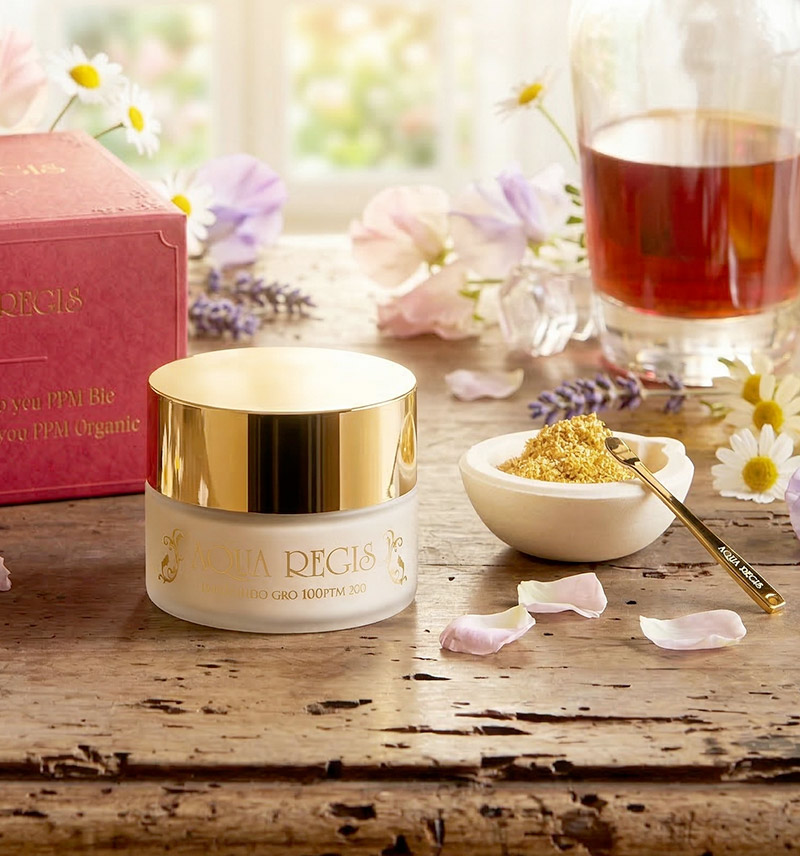
One example of this approach is Aqua Regis, an Italian face cream that combines a rich botanical formulation with contemporary cosmetic ingredients.
Its ingredient list includes aloe vera, Rosa moschata seed oil, vitamin E, hyaluronic acid, shea butter, Reishi and Chaga extracts, alongside its distinctive use of gold.
The formulation illustrates how traditional botanical ingredients can coexist with modern cosmetic technology.
Rather than relying on a single active ingredient, it brings together oils, humectants, botanical extracts and emollients in one product.
Skin Changes With the Season
One of the most useful ideas in skincare is that the same routine does not necessarily work all year. Winter may call for richer textures. Summer may require lighter layers. Travel can change hydration levels. Air conditioning, heat, sea water and sun can all alter the way skin feels. Listening to these changes is often more useful than following rigid rules.
The Best Summer Routine Is the One You Will Actually Use
Skincare does not need to become another complicated summer commitment. The most effective routine is usually the one that is simple enough to be repeated consistently.
- Protect.
- Cleanse gently.
- Hydrate.
- Use products that feel comfortable.
And remember that skin, like summer itself, changes from day to day.
The objective is not perfection. It is balance.